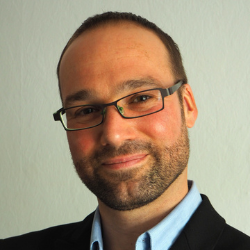
Dr Florian Merkle
Human stem cell models of obesity and neurological disease
NYSCF-Robertson Stem Cell Investigator
Affiliated PI of Cambridge Stem Cell Institute
Affiliated PI of Institute of Metabolic Science
School of Biological Sciences Theme Lead for Molecules and Cells
Contact information
fm436[at]cam.ac.uk
ORCID: 0000-0002-8513-2998
Keywords: pluripotent, obesity, hypothalamus, target discovery, translation, repurposing, neurodegeneration
Investigator biography
Florian Merkle obtained his bachelor degree in biology from Caltech and his PhD in Neuroscience at UCSF where he determined the lineage and potential of adult neural stem cells in the mouse brain. He then pioneered human pluripotent stem cell (hPSC) differentiation to hypothalamic neurons and was an early adopter of CRISPR/Cas9-gene editing in hPSCs as a postdoc at Harvard University before joining the Institute of Metabolic Science (IMS) at the University of Cambridge in 2015 as a New Blood fellow. At the IMS, Florian became a Sir Henry Dale Fellow, Ben Barres Fellow, and Robertson Stem Cell Investigator before joining the Department of Pharmacology in 2024 as an Associate Professor (Senior Lecturer). Florian’s contributions to the field have been cited over 10,000 times and published in leading journals including Nature, Science, Nature Genetics, and Cell Stem Cell. Florian is an affiliate member of the IMS and Cambridge Stem Cell institute, and serves as an industry consultant, board member, and entrepreneur. He has received numerous awards including a “Golden Ticket” (NovoNordisk), the Michael Harbuz Young Investigator Prize (British Society for Neuroendocrinology), C.J. Herrick award in Neuroanatomy (American Association of Anatomists), and a Springboard Award (Academy of Medical Science). In addition to helping train the next generation of leaders in his group, Florian mentors early career researchers across the UK, and helps organise a programme to give undergraduates from under-represented backgrounds the chance do life science research at Cambridge.
Research Summary
The Merkle group uses a combination of human pluripotent stem cell (hPSC) and animal models to pursue three research areas with the ultimate aim of developing new therapies. First, they have studied genetic stability of hPSCs and are identifying culture methods that minimise the appearance of culture-acquired mutations such a TP53 point mutations. They helped identify KOLF2.1J as a ‘reference’ human iPSC line that is now used by over 750 groups in 28 countries worldwide and forms the basis of several large-scale studies. Second, the Merkle group differentiates hPSCs into hypothalamic neurons that regulate appetite and has used this model system to both reveal how anti-obesity drugs like semaglutide (Ozempic/Wegovy) signal, and to identify new candidate appetite-regulatory targets and anti-obesity therapeutic strategies. Third, they use hPSC and mouse models to study the neuroprotective effects of anti-obesity drugs and optimise therapeutic strategies, since drug repurposing offers a rapid path to the clinic. One drug identified using this strategy is likely to be included in a large-scale clinical trial in the near future.
Lab Members
- Alex Nicholson (asn33[at]cam.ac.uk) postdoc working to commercialise anti-obesity target discovery using human iPSC-derived hypothalamic models
- Bingchen Zou (bz295[at]cam.ac.uk), summer student focusing on multi-omic integration of data from mouse models of proteinopathy
- Dmytro (Dima) Shepilov (ds2096[at]cam.ac.uk), final-year PhD student focusing on the mechanism of action of candidate neuroprotective drugs
- Ed Harding (ech66[at]cam.ac.uk), senior postdoc leading efforts for neuroprotective drug repurposing
- Ibrahim Khan (iak29[at]cam.ac.uk), medic identifying neuroprotective mechanisms using brain histology and iPSC-derived astrocyte models
- Pratik Koppikar (psk34[at]cam.ac.uk), final-year PhD student using CRISPR prime editing to fluorescently tag the endogenous human proteome
- Roxane Chen (rerc2[at]cam.ac.uk), second-year PhD student focusing on the role of ALK in metabolic regulation and non-small-cell lung cancer
- Salman Tamaddon-Jahromi (st2030[at]cam.ac.uk), postdoc developing hypothalamic models of metabolic disease
- Simone Mazzaferro (sm2676[at]cam.ac.uk), senior postdoc using functional imaging and electrophysiology to characterise human hypothalamic neurons
Tomi Akingbade (oea26[at]cam.ac.uk), lab manager and technician supporting lab operations and hypothalamic disease modelling efforts
Current funding sources
Cambridge Enterprise
AstraZeneca
New York Stem Cell Foundation
NovoNordisk