
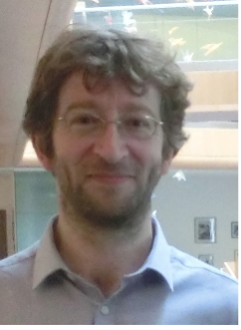
Professor Mark Howarth
Innovating Protein Technologies for Therapeutic and Vaccine Design
Sheild Professor of Pharmacology
E-mail: mh2186 [at] cam.ac.uk
Phone: +44 (0) 1223 34028 / 34021
Please visit our lab website for further information and the latest news: www.howarthgroup.org
Research summary
Inspired by extraordinary molecular features from the natural world, our research develops new approaches for prevention and therapy. By engineering and evolving proteins and cellular systems, our projects range from fundamental analysis of protein interactions through to clinical application.
Keywords
Protein engineering, synthetic biology, vaccines, cancer signalling, antibodies, computational protein design, immunology, cell therapy, chemical biology, bioconjugation, directed evolution.
Investigator biography
Mark did graduate work in molecular immunology at Oxford University Institute of Molecular Medicine and Southampton University Cancer Sciences. In his postdoctoral work at MIT, he developed tools in chemical biology, advanced microscopy and nanotechnology to understand receptor trafficking.
He was previously Professor of Protein Nanotechnology at Oxford University Department of Biochemistry, receiving the Royal Society of Chemistry Norman Heatley Prize for Chemical Biology. He is a founder of SpyBiotech, which is now running vaccine clinical trials, and Gastrobody Therapeutics. Several members of his group have founded their own start-up companies.
Mark gives lectures and workshops on Entrepreneurship to undergraduates and graduate groups and is Translational Champion for the Department. Resources from his group have been distributed to more than a thousand academic groups and licensed to a range of companies.
His work has been funded by ERC, BBSRC, EPSRC, MRC, Wellcome Trust and through collaborations with multiple pharma and biotech companies.
The theme of our research is Innovating Protein Technologies for Therapeutics and Vaccine Design. We have a range of project areas running in the lab, from fundamental understanding of protein interactions and reactivity through to clinical application. The lab is also enthusiastic about entrepreneurship, supporting team members to create new concepts and develop the potential of their new technologies to tackle important challenges.
Immuno-engineering and Global Health
Developing an effective vaccine may be the most effective way to improve human health. The group has established a route to accelerate vaccine development through our Plug-and-Protect platform. A limiting factor in vaccine generation is the difficulty of turning a promising target protein into the kind of assembly that would give long-lasting disease protection. We showed rapid and efficient decoration of virus-like particles, which elicited a strong immune response even with only a single injection. We demonstrated potent immunization towards the global health challenge of malaria, working with collaborators at Oxford University’s Jenner Institute. This approach is now being used by many groups against cancer and diverse infectious diseases, e.g. HIV, influenza, tuberculosis, and veterinary pathogens. Tag/Catcher vaccine technology has progressed to Phase 3 clinical trials for Covid-19, with clinical trials underway against malaria and CMV (a major cause of deafness and blindness in babies). Our current focus in this area is to create new protein antigens and nanoparticle strategies to achieve broadly protective immune responses against targets that evade regular immune responses. We are working to establish new routes to general mucosal immunity, as well as to protect from gastric cancer. We have ongoing collaborations with Oxford, Caltech and the NIH, working towards protection against the most urgent global health challenges.
Synthetic Biology and Click Biology from a New Generation of Protein Interactions
We have harnessed an amazing feature of the surface of the pathogenic bacterium Streptococcus pyogenes, to create a family of protein superglues. This natural protein reactivity enabled us to form a spontaneous isopeptide bond between genetically-encoded protein and peptide partners. Our favourite pair, SpyTag/SpyCatcher, is one of the strongest protein interactions ever measured. SpyTag is now applied by more than a thousand labs around the world for diverse areas of basic research and biotechnology. The group also introduced the concept of Click Biology, to describe how easy-to-use genetically-encoded reactivity may empower a revolution in biological research, as happened in the physical sciences through Click Chemistry. We have now developed interactions tunable by pH and light. Combining computational design and evolution through phage display, we created the first genetically-encoded interaction reacting at the diffusion limit and approaching infinite affinity. We are extending this new class of protein interaction to create unique new possibilities for synthetic biology. We are building a rainbow of protein superglues, to pattern interactions within cells and between cell-types. SpyTag provides unique opportunities for building resilient enzyme teams, for green biotransformation. Click Biology is a powerful tool to overcome challenges in gene therapy targeting and cancer evasion of cell therapy. SpyTag accelerates the creation of antibody teams for combinatorial control of cell signalling, for more potent targeting of cancer. We are now integrating protein binder assemblies with successful small molecule drugs, to achieve a new level of precision in control of cell fate and unveil new therapeutic possibilities.
Unique Protein Architectures and Chemical Biology for Cell Therapy
Our studies defining the limits of cancer cell capture from blood made clear that even the best antibody interactions are not good enough. We have developed a new class of binding proteins that form covalent bonds to endogenous protein targets. NeissLock was engineered from an adhesion system from Neisseria meningitidis and forms an anhydride in response to calcium, reacting irreversibly with neighbouring proteins. Protein ligands that never let go of their targets should reduce the detection limit of soluble biomarkers for early diagnosis. We are progressing NeissLock technology to generate long-acting therapeutics through hitchhiking on red blood cells. Cell therapies can allow pharmacology quite different to small molecule or protein therapeutics. We are also working to enhance CAR-T cell therapy of cancer, which has been revolutionary against leukaemia/lymphoma but has had little success against solid tumours.
Get in contact for further information about any of these projects, or to discuss the possibility of working on other projects in the area of synthetic biology/vaccines/chemical biology/cancer.
Click Biology highlights the opportunities from reliable biological reactions. Howarth MR. Nature Chemical Biology 2025 Jul;21(7):991-1005.
Proactive vaccination using multiviral Quartet Nanocages to elicit broad anti-coronavirus responses. Hills RA, Tan TK, Cohen AA, Keeffe JR, Keeble AH, Gnanapragasam PNP, Storm KN, Rorick AV, West AP Jr, Hill ML, Liu S, Gilbert-Jaramillo J, Afzal M, Napier A, Admans G, James WS, Bjorkman PJ, Townsend AR, Howarth MR. Nature Nanotechnology. 2024 May 6.
SpyMask enables combinatorial assembly of bispecific binders. Driscoll CL, Keeble AH, Howarth MR. Nature Communications. 2024 Mar 16;15(1):2403.
Simultaneous identification of viruses and viral variants with programmable DNA nanobait.
Boskovic F, Zhu J, Tivony R, Ohmann A, Chen K, Alawami MF, Dordevic M, Ermann N, Pereira-Dias J, Fairhead M, Howarth M, Baker S, Keyser UF. Nature Nanotechnology. 2023 Mar;18(3):290-298.
NeissLock provides an inducible protein anhydride for covalent targeting of endogenous proteins.
Scheu AHA, Lim SYT, Metzner FJ, Mohammed S, Howarth M. Nature Communications 2021 Jan 29;12(1):717.
Gastrobodies are engineered antibody mimetics resilient to pepsin and hydrochloric acid.
Wicke N, Bedford MR, Howarth M. Communications Biology 2021 Aug 11;4(1):960.
Mosaic nanoparticles elicit cross-reactive immune responses to zoonotic coronaviruses in mice.
Cohen AA, Gnanapragasam PNP, Lee YE, Hoffman PR, Ou S, Kakutani LM, Keeffe JR, Wu HJ, Howarth M, West AP, Barnes CO, Nussenzweig MC, Bjorkman PJ. Science 2021 Feb 12;371(6530):735-741.
A COVID-19 vaccine candidate using SpyCatcher multimerization of the SARS-CoV-2 spike protein receptor-binding domain induces potent neutralising antibody responses. Tan TK, Rijal P, Rahikainen R, Keeble AH…Howarth M*, Townsend AR*. Nature Communications 2021 Jan 22;12(1):542. *Corresponding authors
Overcoming Symmetry Mismatch in Vaccine Nanoassembly through Spontaneous Amidation.
Rahikainen R, Rijal P, Tan TK, Wu HJ, Andersson AC, Barrett JR, Bowden TA, Draper SJ, Townsend AR, Howarth M. Angewandte Chemie 2021 Jan 4;60(1):321-330.
Approaching infinite affinity through engineering of peptide-protein interaction.
Keeble AH, Turkki P, Stokes S, Khairil Anuar INA, Rahikainen R, Hytönen VP*, Howarth M*. PNAS 2019 116:26523-26533. *Corresponding authors
PhD positions
We are keen to take PhD students to start in October 2027, so please get in contact with Mark to discuss potential projects and funding routes.
It is great to work together on devising a project that connects what we are advancing in the lab and what you are excited by.
We are also enthusiastic to welcome students into the lab who are already on one of the doctoral training programmes at Cambridge.
Postdoctoral positions
None available currently.
Undergraduate researchers
We look forward to taking Part II students in the coming academic year. We will also be hosting two undergraduate researchers for 8-10 week projects in the summer.
Please email Mark early in the year, so that we can apply together for vacation studentship funding.